
A mower that won’t start or suddenly runs rough rarely means a trip to the shop. Most of the time, one part has worn out or failed, and once you identify it, the fix is usually straightforward. The trouble is that many homeowners spend more time guessing at the problem or buying the wrong mower repair parts than they do on the actual repair.
Fast troubleshooting follows a simple order: identify the symptom, match it to the likely cause, then get the right part. Before that starts, it’s worth taking one extra step. A national Cooperative Extension safety resource notes that mower maintenance goes smoothest when the engine is shut off, the spark plug wire disconnected, and all moving parts fully stopped before any work begins.
Lawn Mower Troubleshooting Starts with Recognizing the Symptoms
Guessing at a cause before identifying the symptom is how most people end up buying a part that doesn’t fix anything. Four symptoms account for most lawn mower repair calls: the mower won’t start, it cuts unevenly, it vibrates or makes noise, or it smokes and runs hot. Each points toward a specific, limited set of likely causes, which is what makes fast diagnosis possible.
The mindset that speeds everything up: start with the symptom, narrow down the cause, then buy the part. Buying parts first and hoping one fixes the issue is the slow, expensive way to do it. Once you identify a part, the next step is to safely access it to check or replace it, as covered further down.
Lawn Mower Won’t Start: Causes and Parts You May Need
A mower that won’t start is usually a fuel, spark, or airflow problem. Old or contaminated fuel is one of the most common causes, especially after sitting unused for a season. A faulty spark plug, recognizable by corrosion or heavy carbon buildup, is another frequent culprit, and a dirty air filter can cause the same symptom on its own.
The parts that typically resolve this are spark plugs, fuel filters, and air filters, usually in that order. For a deeper walkthrough of no-start troubleshooting, including battery and ignition checks, MoJack’s guide to troubleshooting common riding mower problems covers the full diagnostic path.
Uneven Cutting or Poor Performance: What to Check First
When grass comes out cut unevenly, or the mower seems to be working harder than it should, the deck and blades are the first place to look. Dull or damaged blades are the most common cause, since a blade that isn’t cutting cleanly tends to tear grass instead of slicing it. Uneven deck alignment is the second likely cause, particularly if the unevenness follows a consistent pattern across the yard.
Replacement blades resolve the first issue directly, while deck adjustments resolve the second. Either fix means getting underneath the deck to actually see what’s going on, so cutting quality is worth treating as an early warning rather than a cosmetic issue.
Excessive Vibration or Noise: Signs of Loose or Damaged Components
Vibration and unusual noise almost always trace back to something loose or out of balance. Loose mounting hardware is a frequent and easy-to-miss cause, since bolts and brackets naturally work themselves looser over a season of use. Bent or unbalanced blades are another common cause, and they tend to produce a rhythmic vibration that worsens as mowing speed increases.
Blade adapters and fresh mounting bolts typically solve both issues, and checking either one means getting a clear, steady view of the deck rather than a glance from ground level. A loose component today is often a bigger mechanical fix a season from now.
Smoke or Overheating: When Your Mower Is Under Stress
Smoke or a mower that runs hotter than usual is a sign the engine is working harder than it’s designed to. Low or dirty oil is the most common cause, since oil that’s overdue for a change loses its ability to reduce friction. Clogged air pathways are the second likely cause, restricting the airflow an engine needs to stay cool under load.
An oil change, a fresh air filter, and a check of cooling-related components usually resolve it, and all three are easier to inspect properly with the mower raised rather than tilted on the ground. Catching this symptom early often means a simple parts swap instead of a bigger repair later.
Getting Safe, Stable Access Before You Start
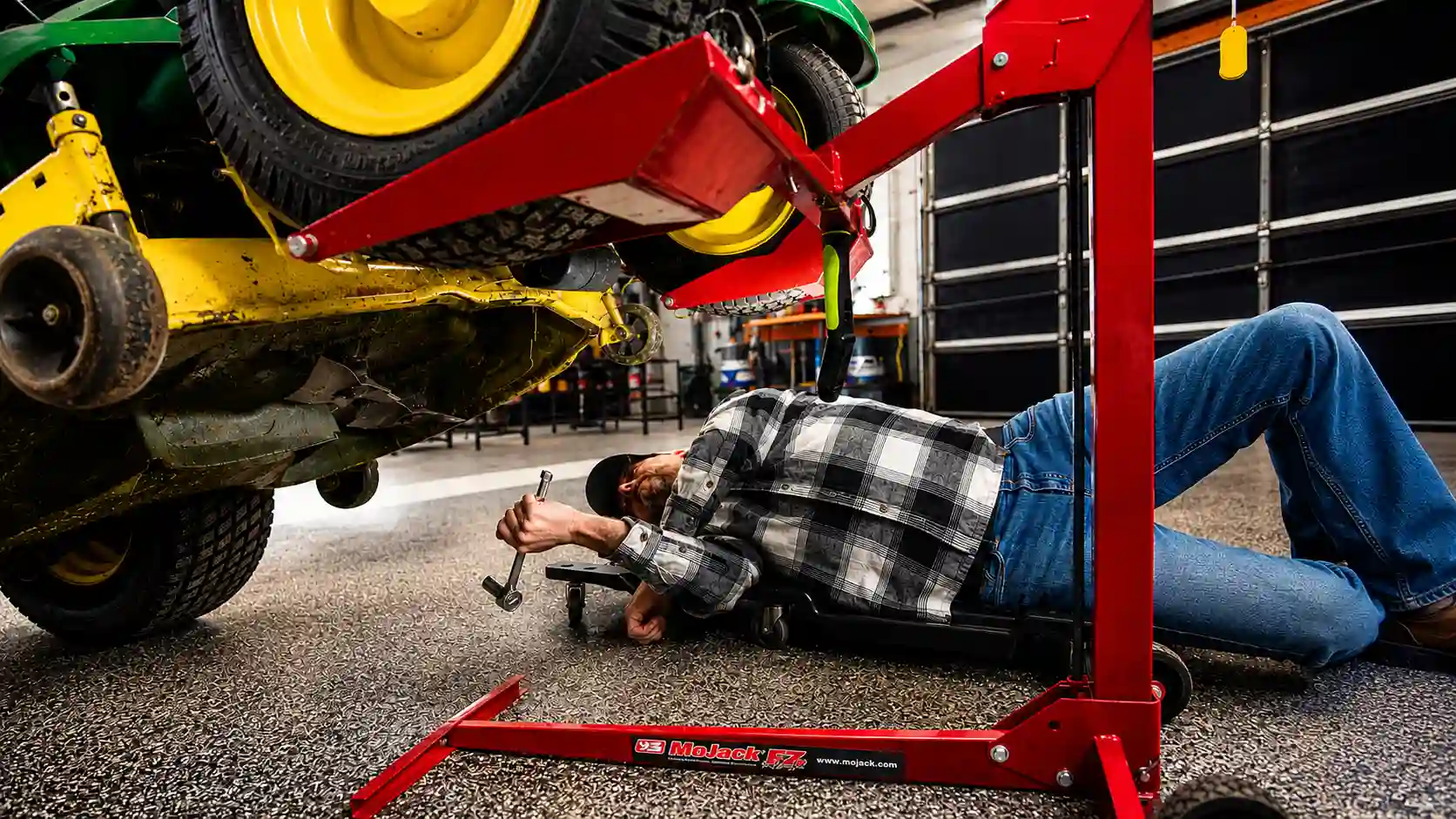
Every fix above eventually requires getting underneath the mower or around the deck, and that’s where many home repairs get harder than they need to be. Propping a mower on blocks or a car jack works in a pinch, but it doesn’t provide the same stable, hands-free access as a purpose-built mower lift. For a full walkthrough, MoJack’s guide on how to lift a lawn mower by yourself covers the process step by step.
Stable access matters just as much for a five-minute spark plug swap as a full blade replacement, since either job goes faster once the mower isn’t the thing you’re fighting with.
Tools That Make Lawn Mower Repairs Faster and Safer
Beyond the parts themselves, a short list of tools makes nearly every fix on this list easier: a dedicated lawn mower lift for stable underside access, basic hand tools for the swaps above, and safety gear, gloves and eye protection especially, for handling blades or hot engine components.
MoJack’s own lawn mower accessories, including a workbench attachment and deck scraper, turn a lift into a more complete repair station rather than just a way to get the mower off the ground.
How to Choose the Right Lawn Mower Repair Parts
Matching a part exactly to the mower’s make and model is the single biggest factor in whether a repair sticks. A part that’s close enough but not exact can fail early. Durable, manufacturer-recommended components are worth the small premium over generic parts, which may fit poorly or wear out faster.
The owner’s manual is the fastest way to confirm the correct part number.
The Hidden Reason Lawn Mower Problems Keep Coming Back
A repair that fixes the symptom but skips the root cause tends to resurface within a season. Replacing a spark plug without addressing why it fouled, or swapping a belt without checking what wore it out, is a common way the same problem comes back twice. Skipping regular maintenance afterward is another frequent pattern, since a fixed mower still needs the same oil changes and filter checks as before.
Having a stable way to get under the mower already set up, rather than reaching for whatever’s in the garage each time, tends to turn occasional maintenance into a consistent habit.
Where MoJack Fits Into Mower Repairs
MoJack is based in Wichita, Kansas, and builds mower lifts, lift replacement parts, and accessories shipped across the United States, Canada, Europe, and Australia. The company doesn’t sell spark plugs or blades, but it solves the part of the job that happens before any part gets installed: safely elevating the mower for the repair.
That focus is why the lift lineup has grown into several models, each matched to a different mower weight, while the repair parts stay with the manufacturers who make them.
Lawn Mower Repair Questions Answered
Does MoJack sell spark plugs, filters, or blades?
No. MoJack builds mower lifts, lift accessories, and lift replacement parts. The spark plugs, filters, and blades in this guide come from the mower’s own manufacturer or a parts retailer.
What’s the fastest way to diagnose a lawn mower problem?
Start with the symptom rather than guessing at a cause. Matching the symptom- won’t start, uneven cutting, vibration, or smoke- to its likely cause narrows down the correct part before any money gets spent.
Why does a lift matter if I’m just swapping one small part?
A quick swap still goes faster with stable, hands-free access to the mower’s underside. Improvised supports leave the mower doing most of the work of staying put, while a lift holds that position on its own.
How often should routine maintenance happen to avoid repeat problems?
Following the mower’s owner’s manual schedule for oil changes, filter checks, and blade sharpening is the most reliable way to catch small issues before they turn into the four symptoms covered above. Quick, regular checks are easier to actually keep up with when getting underneath the mower doesn’t require a production every time.
Get the Right Access Before the Next Repair
Diagnosing a lawn mower problem fast comes down to matching the symptom to the cause and then the cause to the right part. MoJack helps you get there safely, with stable access to the deck and undercarriage.
Browse MoJack’s lineup of mower lifts to find the right fit for the next repair.