
There’s a specific kind of frustration that comes from pulling your mower out on the first warm Saturday of the season and having it sputter, stall, or refuse to start at all. Usually the culprit isn’t bad luck. It’s a lawn mower maintenance schedule that got skipped or guessed at instead of followed.
According to the University of Florida IFAS Extension, a mower tune-up should occur roughly every 3 months or about every 25 hours of use to keep it running as it’s supposed to. That’s a useful baseline, but the real answer depends on how hard you’re running your mower, what kind of conditions it’s working in, and whether it’s a push mower or a riding mower with a lot more moving parts to look after.
The Right Maintenance Schedule Depends on How You Use Your Mower
A single fixed timeline doesn’t work well across every mower and every yard. A homeowner mowing a quarter acre once a week has very different needs than someone running a zero-turn across several acres of commercial property multiple times a month. Light residential use lets you stretch some tasks out longer, while heavy or commercial use means shorter intervals across the board.
Environment matters just as much as hours. Dusty conditions clog air filters faster. Thick or wet grass puts more strain on blades and belts. A mower stored outside is exposed to more moisture and temperature swings than one kept in a garage. Instead of a rigid rule, it helps to think in terms of a flexible framework built around actual hours of use, paired with a seasonal check-in regardless of how much the mower has run.
A Simple Lawn Mower Maintenance Schedule to Follow
Rather than tracking a dozen separate rules, it helps to think in terms of three checkpoints: before each use, every 25 to 50 hours of operation, and once each season. Each one covers a different layer of care, from quick visual checks to deeper engine work to a full seasonal reset. The sections below walk through exactly what belongs in each one.
Quick Checks Before Every Use That Prevent Bigger Problems
Starting a few minutes before you mow can save hours of troubleshooting later. Look over the blades for visible dents, cracks, or dullness, since a damaged blade can throw the whole cutting deck out of balance. Check the oil and fuel levels while the engine is cold, and clear any built-up debris from the deck.
It’s also worth a quick glance at the belts, bolts, and tires. Loose hardware or an uneven tire rarely causes an immediate breakdown, but it’s exactly the kind of small thing that turns into a bigger repair if it gets ignored mowing after mowing.
Core Tasks Every 25 to 50 Hours of Use
This is where most of the real engine care happens. Changing the oil on schedule keeps internal components lubricated and prevents buildup that can lead to premature wear. A clean or fresh air filter keeps the engine breathing properly, which affects everything from starting reliability to fuel efficiency.
Spark plug condition is worth checking here, too, since a fouled or worn plug is a common cause of mowers starting hard or running rough. Lubricating moving parts during this same window reduces friction across the board. If you’re noticing symptoms like stalling, rough idling, or a mower that starts but won’t stay running, our guide to troubleshooting common riding mower problems walks through what’s usually behind each one.
Seasonal Maintenance for Long-Term Reliability
Once a year, or at the start and end of mowing season, a deeper pass pays off. Replacing spark plugs on a set schedule rather than waiting for a failure keeps starts consistent. Sharpening or replacing blades restores a clean cut rather than the ragged, torn look dull blades leave behind. Cleaning or stabilizing the fuel system prevents the gummed-up carburetor issues that show up after a mower sits for a while.
This is also the right time to inspect and tighten hardware throughout the machine, since vibration from a season of mowing gradually loosens things. For a fuller rundown of what belongs on this seasonal list, our maintenance tips for extending your mower’s lifespan cover it in more depth.
Warning Signs Your Mower Needs Service Now
Some issues shouldn’t wait for the next scheduled checkpoint. Difficulty starting, or an engine that cranks but won’t catch, usually points to fuel, spark, or air problems that get worse the longer they’re ignored. Uneven or ragged cutting is often a sign of dull or unbalanced blades rather than anything wrong with the schedule itself.
Excessive vibration or unusual noise is another issue to take seriously, as it can indicate loose hardware, worn bearings, or a damaged pulley. Smoke, a strong burning smell, or any other visible engine issue is a clear signal to stop and address it before running the mower again.
Why Convenient Access Makes or Breaks a Maintenance Routine
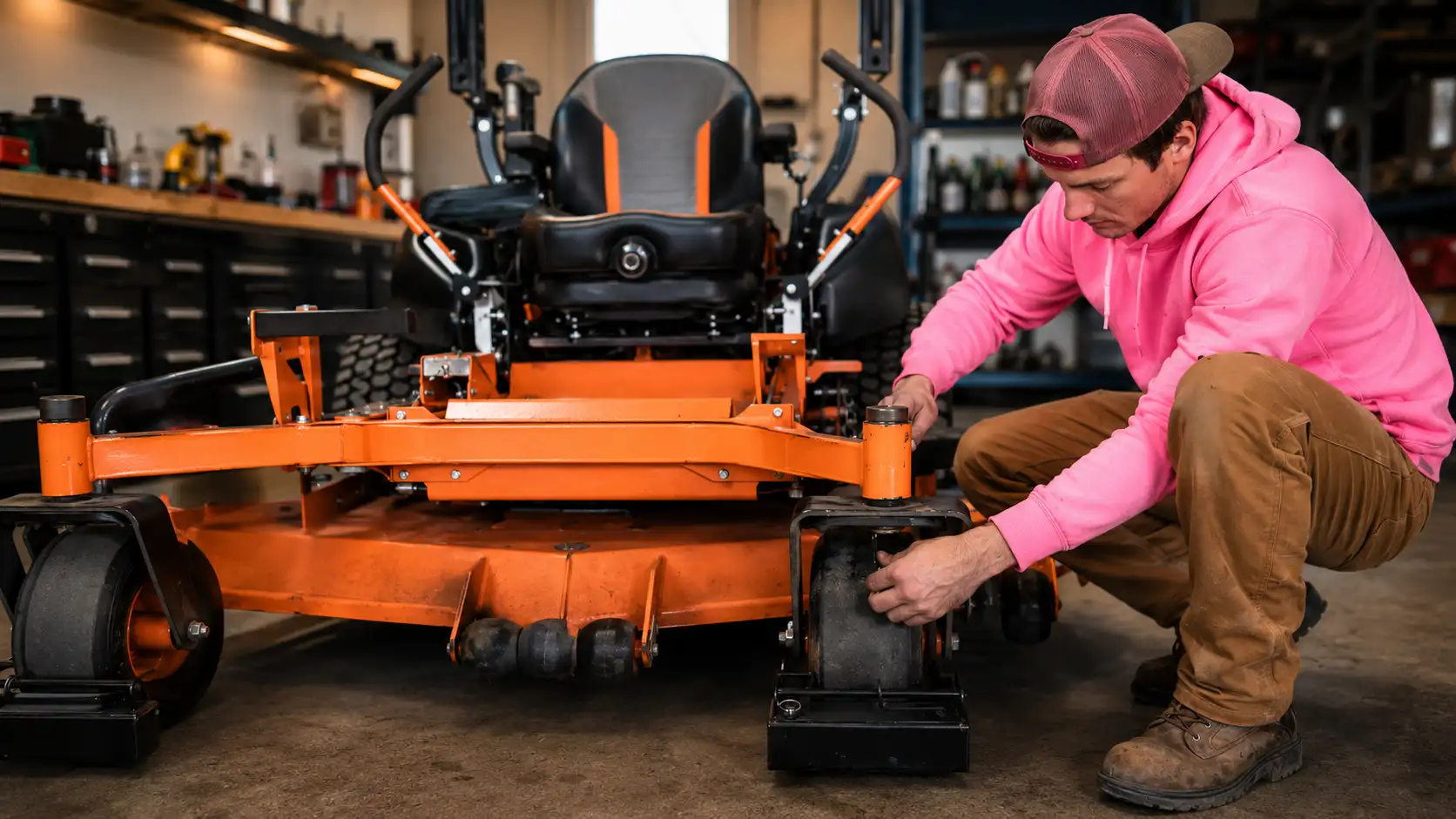
Most skipped maintenance doesn’t come from not knowing what to do. It comes from how inconvenient it is to actually do it. Crawling under a mower deck, propping the front end on whatever happens to be lying around the garage, or fighting with an unstable jack are exactly the conditions that make people put off blade changes and belt inspections they know they should be handling.
The fix isn’t a stricter schedule. It’s removing the friction that keeps people from following the one they already have. When you can safely lift a mower on your own in a few minutes instead of wrestling with makeshift setups, maintenance stops feeling like a chore you’ll get to eventually and starts happening on the timeline it actually needs.
MoJack Builds the Access Point Every Maintenance Schedule Depends On
We built MoJack around a simple idea: a maintenance schedule only works if it’s easy to follow. Our lifts raise riding mowers, zero-turns, and lawn tractors safely and steadily, giving you real access to blades, belts, and the underside of the deck instead of a few awkward inches of clearance. That’s the difference between skipping a task and actually getting it done.
Beyond the lifts themselves, our full lineup covers models built for different mower types and weights, along with genuine replacement parts when a component wears out and accessories built for the job, like deck scrapers and workbench attachments that make routine service faster once your mower is up in the air.
Ready to Make Mower Maintenance Part of Your Routine?
Once you have safe, stable access to your mower, sticking to a real maintenance schedule stops being a hassle and starts being a habit. You’ll spend less time troubleshooting breakdowns and more time actually using your mower.
Find your lift and get the access you need to keep your mower running the way it should, season after season.